
The Wasatch Building Pulse Q2 2025
Key Metrics
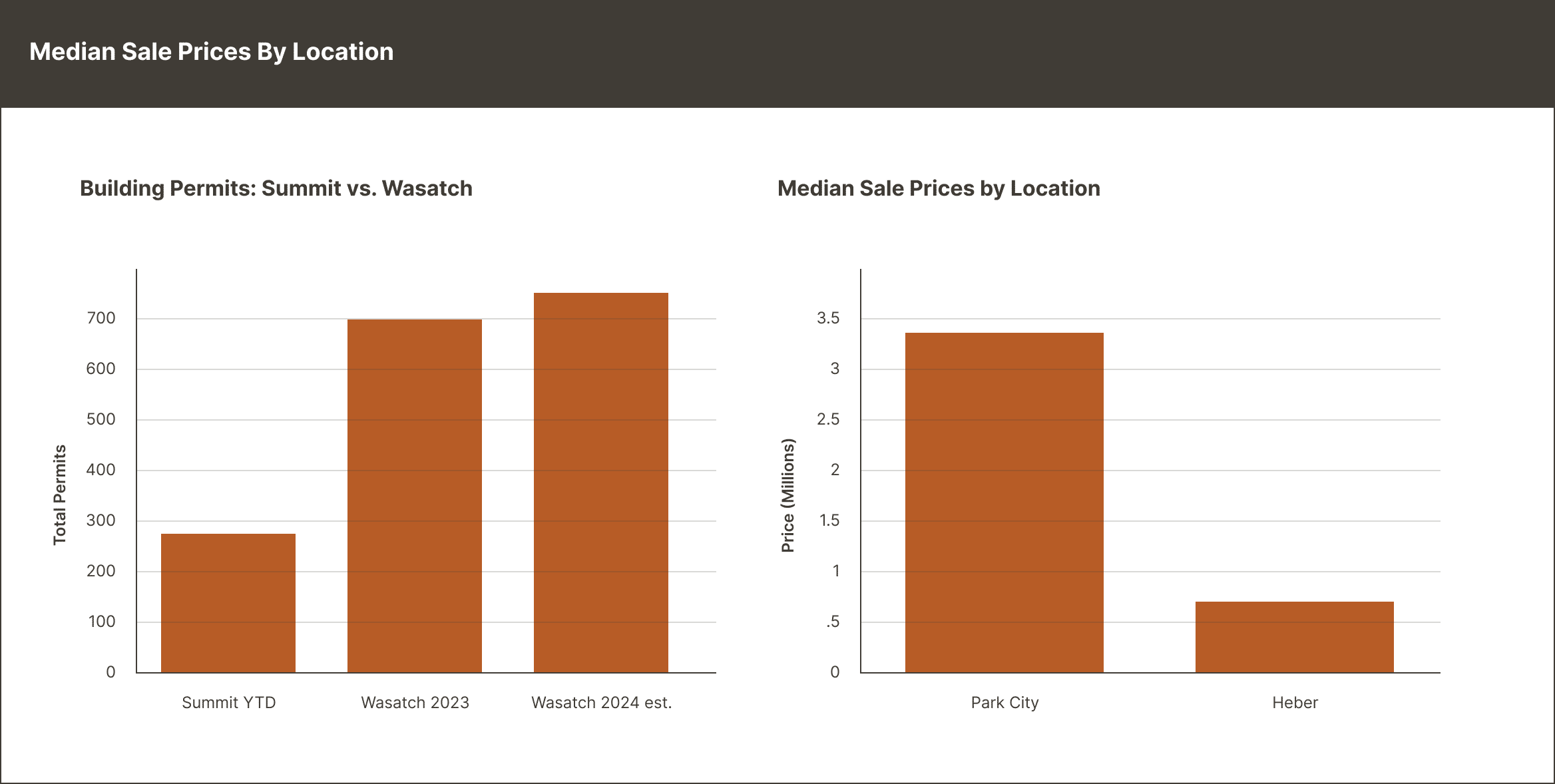
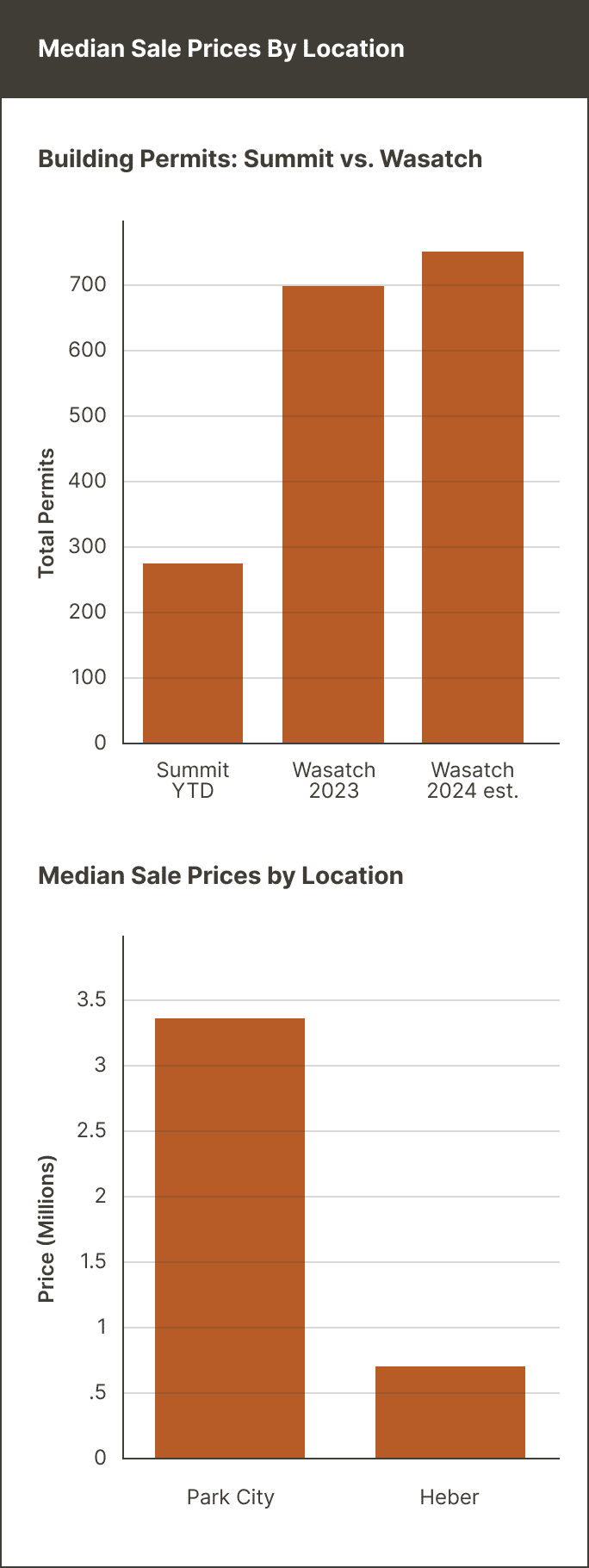
Residential building permits
Summit Co. YTD (Jan 1–Apr 17):
290 total permits
74 new single-family homes
▲ 4%
Wasatch Co. 2023
700 permits → 2024 pace tracking slightly higher
▲ 6%*
New-construction listings on the market
Summit Co.: 116 active new-build listings; median list price $1.6 M; average time to offer 78 days
▲ inventory, ▼ DOM
All resale listings
average DOM
Park City zip 84098: 66 days
▲ 20 days
Vacant lots for sale
Summit Co.: 350 land parcels on MLS; median list $1.6 M
▲ 12%
Median sale price (all property types)
Park City: $3.40 M
Heber: $704 K
▲ strong luxury segment
Typical new-build price window
$900 K – $7 M (90% of listings), outliers to $20 M+
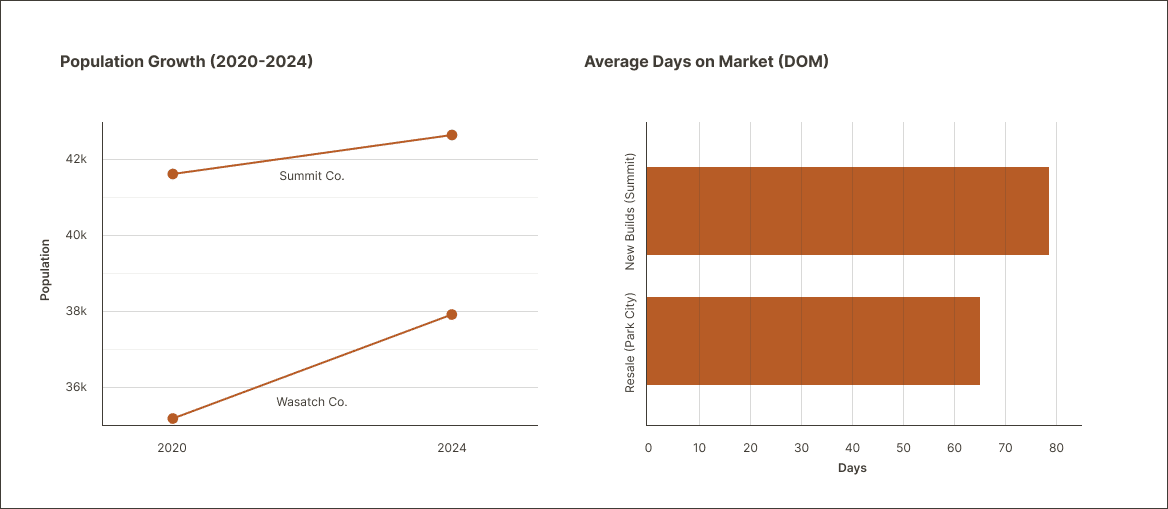
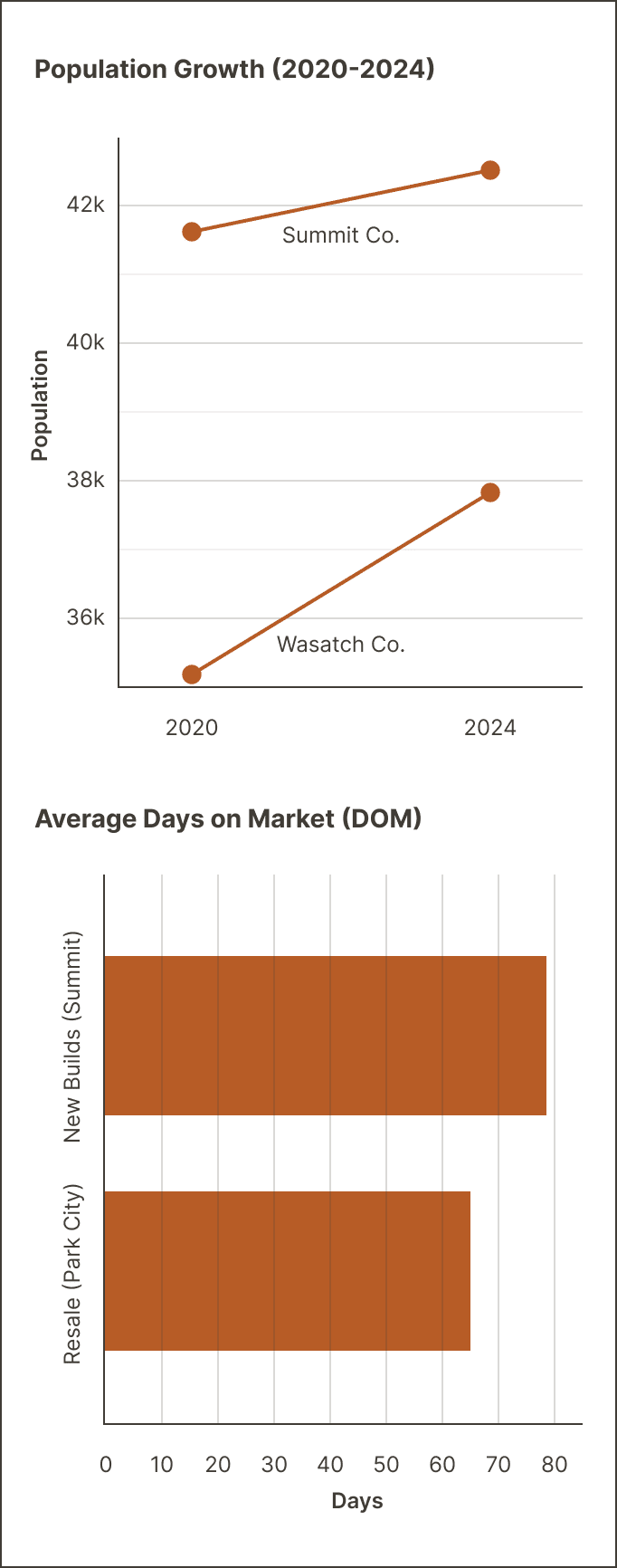
Summit Co. +1.8% → 43,109
Wasatch Co. +8.8% → 37,858
Utah – 7.00% (Bankrate, 25 Jun 2025)
Roughly 3M recreation visitors each year; tourism drives $2.2 B in local spending
Prospective Builders – Five Things
To Watch
1
Deer Valley East Village Expansion
Phase Two earth-work and a two-stage gondola are underway; seven more lifts are scheduled to open by winter 2025-26, adding 2,000+ ski-in/ski-out units over the next five years.
2
The festival will relocate after the 2026 event, removing an estimated $132M in annual economic impact and 24 K out-of-state visitors; officials are scrambling for replacement events.
3
2025 legislature requires most Wasatch-Front cities to allow detached ADUs, easing density rules on parking and lot size. Though Summit/Wasatch are exempt today, the bill suggests statewide momentum toward higher-yield lots.
4
Park City Planning Commission green-lights a 1,971-stall underground garage and transit hub, clearing the path for Deer Valley’s long-stalled base-village build-out.
5
Utah 30-yr rates dropped below 7% for the first time since November, spurring a 9% month-over-month jump in mortgage applications, according to local lenders’ weekly reports.

Life After Sundance: Will a $132 Million Hole Cool the Construction Boom?
When Sundance leaves Park City in 2027, the town stands to lose more than red-carpet celebrities. The festival’s 2024 economic study pegged its contribution at $132M GDP, 1,730 jobs and $14M in tax revenue. Roughly a third of the 73,000 attendees rent short-term lodging at premium winter rates.
Short-Term Shock
Luxury-rental owners face a 10-day vacancy that once fetched $1,500-$3,000 per night. For spec builders targeting nightly-rental investors, that missing revenue stream trims projected IRRs by 1-2 percentage points. Lenders already report tighter underwriting for projects whose pro formas leaned on festival pricing.
Why the Sky Isn’t Falling
The ski season now stretches Thanksgiving to May; Deer Valley’s mega-expansion and Vail’s Epic Pass partnership support record skier visits even without Sundance traffic.
Remote-work buyers still prize the Wasatch Back’s 30-minute commute to SLC International. Net-migration into Summit and Wasatch counties continues to outpace statewide averages.
Utah’s tourism office is courting a “Mountain Futures” tech summit to fill the January slot, promising 15 K high-spend visitors if funding is secured. (RFP pending, Summit County Council minutes, 6 Jun 2025).
Takeaways for Builders
- Diversify product: pivot some inventory from nightly rental condos to primary residence townhomes that meet ADU-ready guidelines in HB88.
- Watch hotel keys: East Village plans eight destination hotels; an oversupply of high-end rooms could soften STR rates further after 2026.
- Leverage shoulder-season perks: market net-zero or high-performance homes that cut holding costs for owners no longer banking on 10-day cash surges.
About the Data
- Oak-n-Crete compiles this dashboard each quarter using:
- County building-department permit logs (Summit & Wasatch)
- Redfin MLS analytics for inventory, pricing & days-on-market
- U.S. Census QuickFacts & CO-EST tables for population trends
- Bankrate for Utah mortgage-rate averages
- Park Record & Salt Lake Tribune for local economic news
Do you have a metric you’d like to track next quarter?
Let us know at build@oakncrete.com